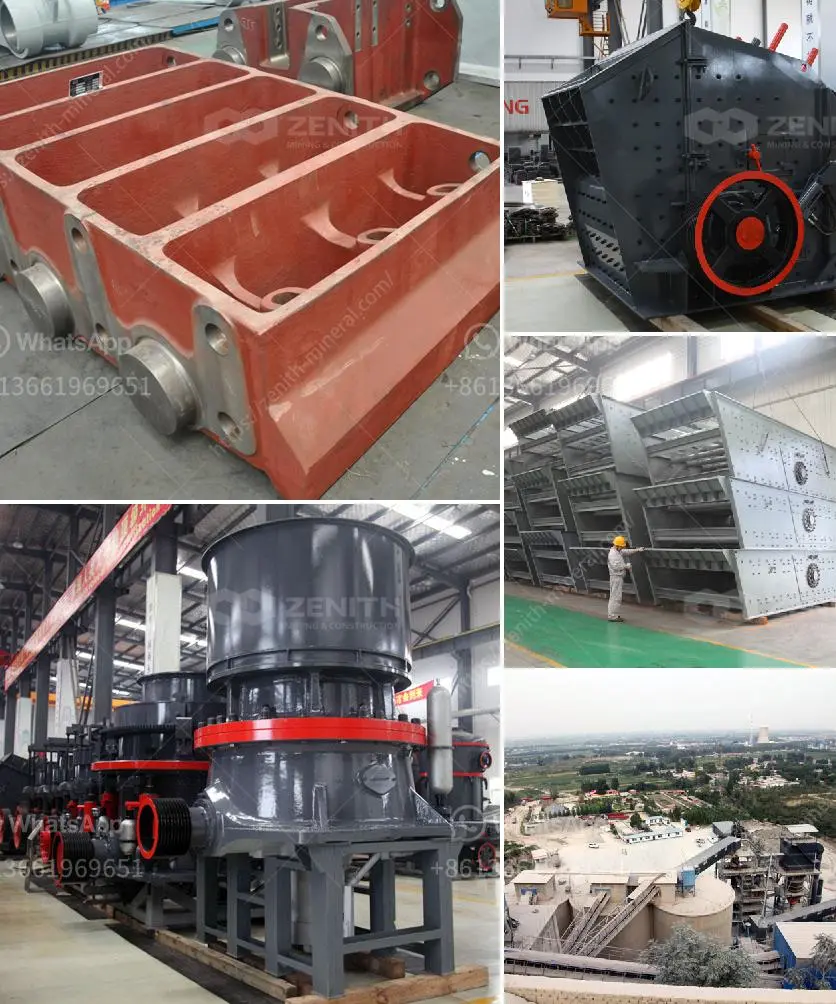
Choosing a crusher based on the desired final product size involves several key considerations to ensure that the equipment aligns with your production goals. Here’s a guide to help you make an informed decision:
-
Understand Material Characteristics:
- Analyze the hardness, abrasiveness, moisture content, and stickiness of the material you are processing. These factors influence the type of crusher that will be most effective.
-
Determine the Desired Final Product Size:
- Clearly define the size of the material you want after crushing. This will influence the choice of crusher, as different crushers produce different sizes and shapes of material.
-
Consider the Different Types of Crushers:
- Jaw Crushers: Best for primary crushing; effective for large-size materials. They provide a rougher output but can be used in a series to achieve smaller sizes.
- Gyratory Crushers: Suitable for large, abrasive materials; used for primary crushing, offering a wide range of output sizes.
- Cone Crushers: Ideal for secondary or tertiary crushing; can produce a uniform product with variable sizes.
- Impact Crushers: Effective for soft to medium-hard materials; used for producing smaller, finer product sizes.
- Hammer Mills: Suitable for soft to medium-hardness materials; provide high reduction ratios and finer particles.
-
Check Crushing Capacity:
- Ensure that the crusher's capacity aligns with your production needs. Crushers are rated for varying capacities (e.g., tons per hour), so choose one that fits your output requirements.
-
Evaluate Reduction Ratios:
- A high reduction ratio indicates that a crusher can significantly decrease the size of material. Crushers like impact crushers generally offer higher reduction ratios but may produce more fines compared to jaw crushers.
-
Consider the Shape Requirement:
- If a particular shape is required, like cubical aggregate, consider an impact crusher or a vertical shaft impactor that typically produces products with a more cubic shape.
-
Adjustability and Versatility:
- Consider crushers that allow for easy adjustment of output size. Some crushers feature adjustable settings to control the size of the final product.
-
Operational Considerations:
- Consider maintenance requirements, ease of operation, power consumption, and cost. Crushers vary in terms of operational complexity and efficiency.
-
Trial Runs and Pilot Testing:
- If possible, conduct a trial run or use pilot testing to ensure the crusher can meet your specific requirements before a full-scale purchase.
-
Consulting with Manufacturers or Experts:
- Engage with crusher manufacturers or industry experts to get recommendations based on your specific needs. They can provide insights based on similar applications and conditions.
By understanding these factors and aligning them with your production goals, you can select a crusher that achieves the desired final product size efficiently and economically.