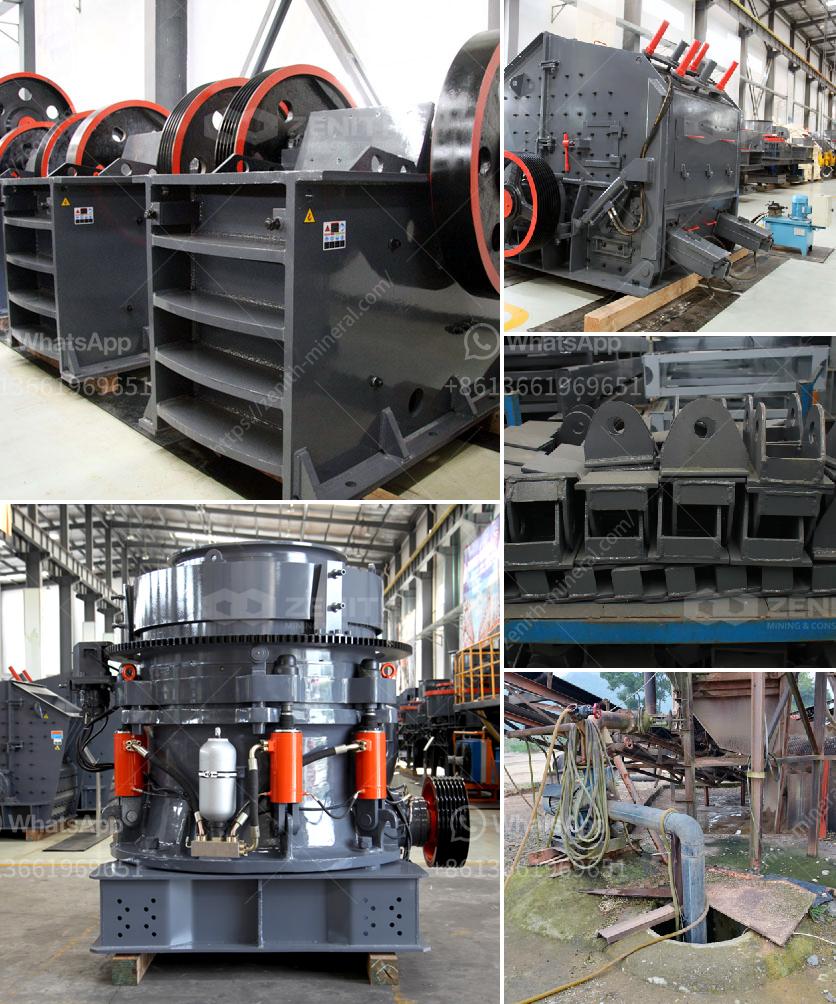


A granite crushing machine is a specialized piece of equipment used to break granite into smaller pieces for use in various construction and industrial applications. Here are some key points about granite crushing machines:
Types: There are several types of granite crushing machines, including jaw crushers, cone crushers, impact crushers, and mobile crushers. Each type has its own specific function and is used at different stages of the crushing process.
Jaw Crusher: Ideal for the primary crushing of granite, jaw crushers can handle large blocks of granite and reduce them to manageable sizes. They consist of a fixed and a movable plate that compresses the rock to break it apart.
Cone Crusher: Used for secondary and tertiary crushing, cone crushers are perfect for finer crushing tasks. They utilize a rotating cone within a hardened bowl to crush the granite into smaller pieces.
Impact Crusher: This type of crusher is best for producing a more cubical shape of the granite material and is often used at the tertiary stage of crushing. They use impact rather than pressure to crush the stones.
Mobile Crushers: These portable units are used when the quarry or site needs to be mobile. They combine all the necessary crushing equipment into one chassis and can move easily around a site.
Advantages: Granite crushing machines are designed for durability and high efficiency. They are often equipped with wear-resistant parts and mechanisms to handle the hardness of granite.
Applications: Crushed granite is widely used in construction for making roads, bridges, highways, and in the production of concrete and asphalt. It's also used in landscaping and decorative stone projects.
Customization: Many manufacturers offer customizable features to adapt the machine for specific requirements and capacities, ensuring optimal performance for various types of granite.
When choosing a granite crushing machine, it's important to consider factors like the material's hardness, desired output size, production capacity, and operational costs. Consulting with an expert or supplier can help you select the right machine for your needs.