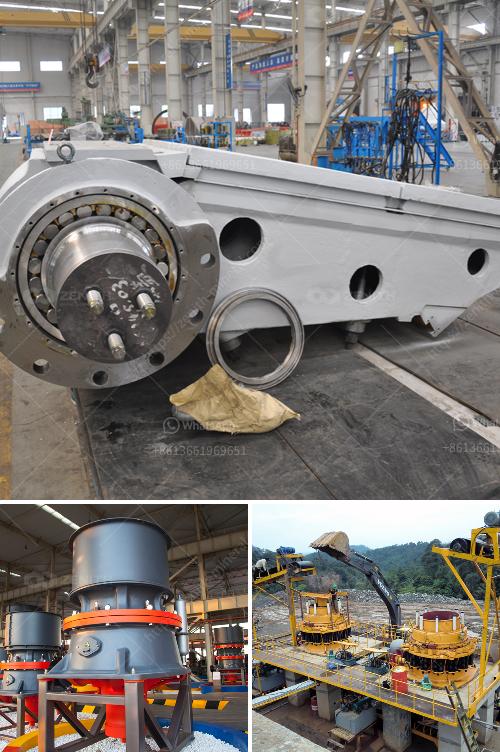


A jaw crushing machine, or jaw crusher, operates to reduce the size of large rocks or ore by placing the material into a compression chamber. Here’s a general overview of how it works:
Feeding: Material is loaded into the top of the jaw crusher via a hopper. The material usually consists of large rocks, ores, or recycled concrete.
Crushing Chamber: The machine has two jaws, one fixed and one movable (called a swing jaw). The movable jaw is attached to a rotating cam or pitman mechanism, which exerts force on the material to crush it. The fixed jaw provides a stable surface for the material to be crushed against.
Movement and Compression: The movable jaw moves in a back-and-forth motion against the fixed jaw. When the movable jaw moves towards the fixed jaw, it compresses the material in the crushing chamber.
Size Reduction: The material is crushed through the compressive force provided by the movement of the jaws. The crushed material moves downwards due to gravity and the motion of the movable jaw, passing through the narrow gap at the bottom of the jaws.
Discharge: The crushed material that is small enough to pass through the gap at the bottom is discharged out of the crusher. The size of the final product can be adjusted by changing the width of the gap between the jaws, known as the discharge opening or setting.
Efficiency: The efficiency of a jaw crusher can be affected by several factors including the hardness and abrasiveness of the material being crushed, the speed and angle of the jaws, and the size of the feed opening relative to the size of the material being processed.
Applications: Jaw crushers are commonly used in mining, construction, and recycling industries for primary crushing tasks. They are effective for breaking down large chunks of material making it easier for subsequent processing stages.