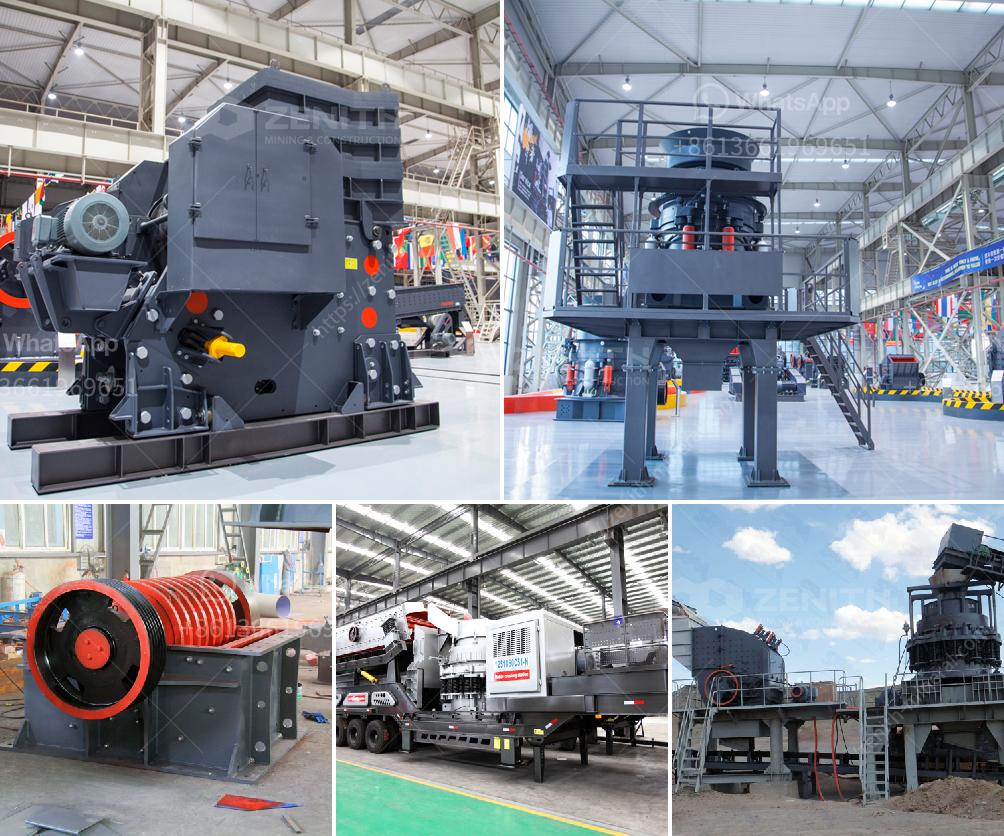
The primary crusher is designed to handle large, hard rocks and reduce them to a manageable size for further processing. It achieves this through several mechanisms:
-
Jaw Crusher:
- Compression: The jaw crusher uses compressive force to break down the rock. The material is fed into the crusher's chamber, where a fixed jaw plate and a moving jaw plate come together in a V-shaped formation. As the moving jaw moves back and forth, it crushes the material against the fixed jaw, breaking it into smaller pieces.
-
Gyratory Crusher:
- Crushing Action: The gyratory crusher features a concave surface and a conical head, both lined with manganese steel. The rock is introduced through the top, and as the conical head rotates eccentrically within the concave, the rock is repeatedly compressed and crushed.
-
Impact Crusher:
- Impact Force: This type of crusher uses high-speed impact force to break the rock. As the rock enters the crusher, it is struck by hammers or blow bars mounted on a rotor, causing it to shatter. The material is then further fragmented by collisions with the crusher walls and other rocks.
Each type of primary crusher has its specific application and is chosen based on the hardness, size, and abrasiveness of the rock to be crushed. The main goal is to produce a uniform output size suitable for secondary crushing or direct use in construction and other applications.