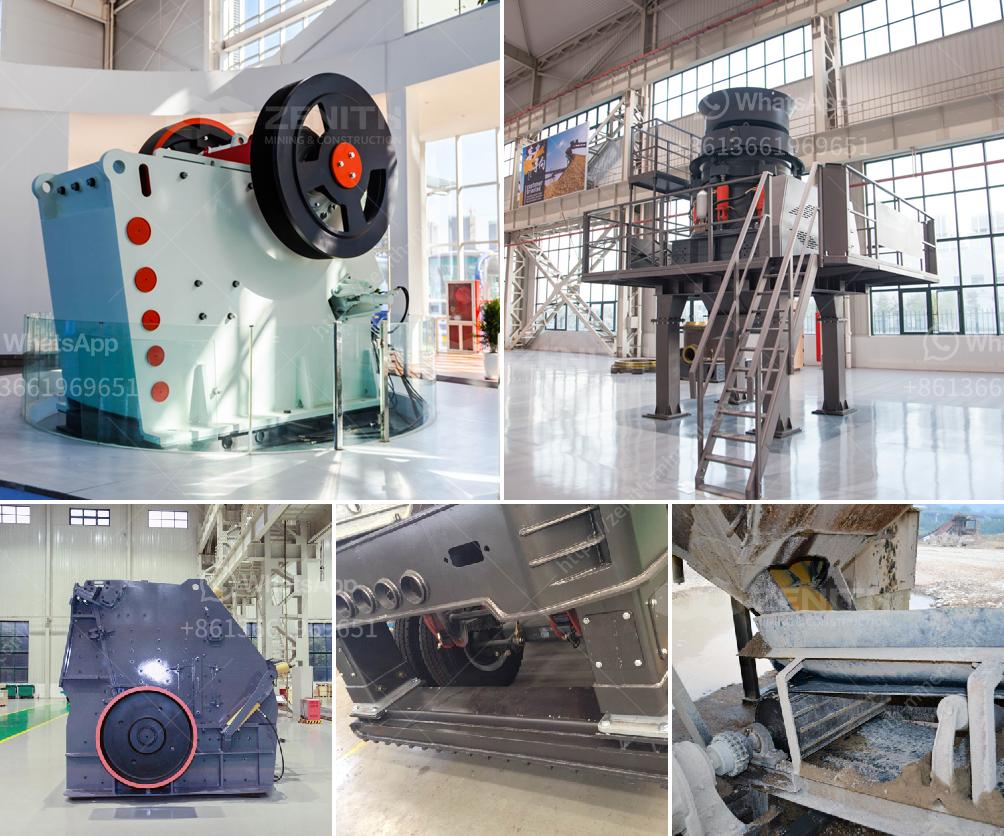


The primary crusher is a crucial machine in the mining and aggregates industries, which is used to reduce the size of large rocks and stones. Its main purpose is to take the material from the mine or quarry and crush it to a size suitable for secondary crushing or direct use in construction.
Here’s a step-by-step overview of how a primary crusher typically works:
Feeding: Large chunks of raw material are fed into the crusher using a feeder mechanism, which might include a conveyor belt or a vibrating feeder that evenly distributes the material into the crusher.
Crushing Mechanism: The crusher employs mechanical force to break down the rocks. Common types of primary crushers include:
Reduction and Screening: The size of the broken material is typically reduced to manageable pieces. Screeners may be used to categorize the crushed material by size, separating finer particles from larger chunks.
Discharge: The crushed material exits the crusher and is usually transported via conveyor belts to secondary crushers or directly to stockpiles for further processing or use.
In essence, the primary crusher plays a key role in the first stage of material processing, ensuring that large rocks and stones are broken down into smaller, more manageable sizes, setting the stage for subsequent crushing stages or immediate use.
If you have a specific type of crusher or application in mind, please let me know, and I can provide more detailed information!