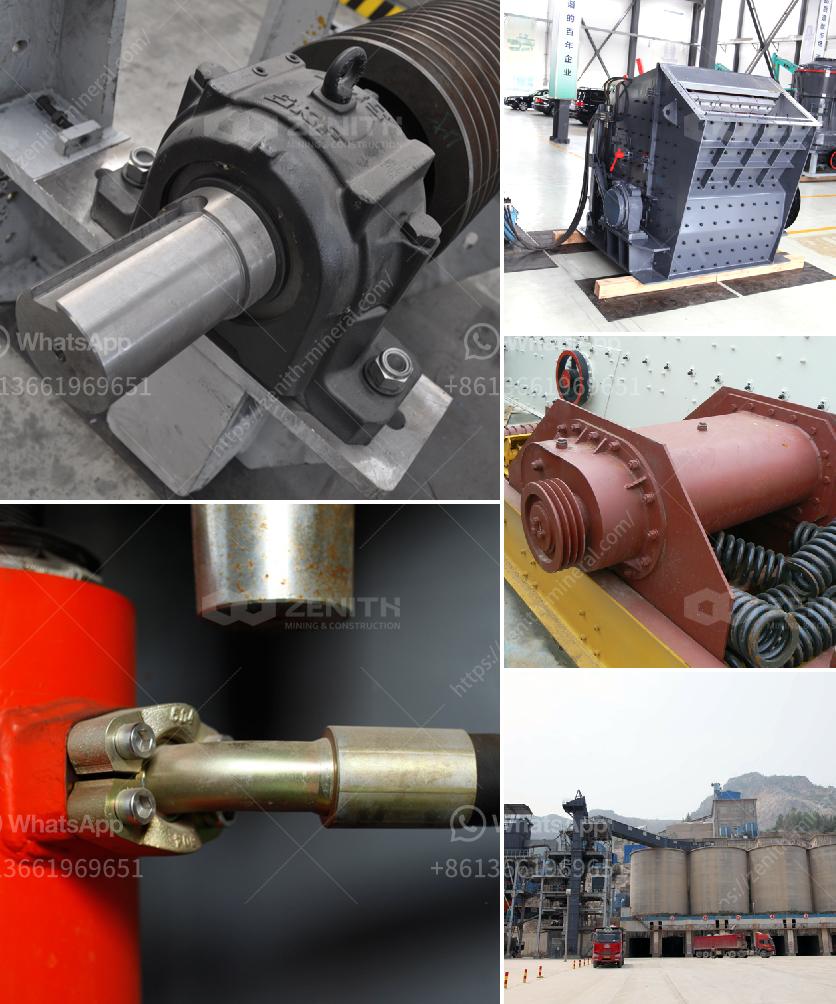


An aggregate jaw crusher works by using compressive force to break down large rocks into smaller pieces suitable for construction and other applications. Here’s a step-by-step overview of its operation:
Feeding: Large rocks or aggregate material are fed into the jaw crusher through a vibrating feeder or directly into the crushing chamber.
Crushing Chamber: The chamber comprises two jaws: a fixed jaw, which is stationary, and a movable jaw. The moveable jaw is mounted on an eccentric shaft and is set at an angle to create a V-shaped configuration.
Movement and Compression: As the eccentric shaft rotates, the moveable jaw moves in a reciprocating motion towards and away from the fixed jaw. When the moveable jaw moves towards the fixed jaw, the rocks are compressed and crushed between the two jaws.
Sizing and Discharge: The crushed material gradually moves down the crushing chamber, getting smaller as it passes through the space between the jaws. Once the pieces are small enough, they pass through the gap at the bottom and are discharged from the crusher.
Adjustability: The size of the output material can be controlled by adjusting the gap between the two jaws, typically by setting shims or adjusting hydraulic cylinders.
Continuous Operation: The jaw crusher typically operates in a continuous manner, allowing for a steady flow of aggregate material. The crushed material may then be transported via conveyor belts for further processing or use.
Overall, the jaw crusher’s efficiency and simple, rugged design make it a popular choice for primary crushing in mining, quarrying, and recycling industries.