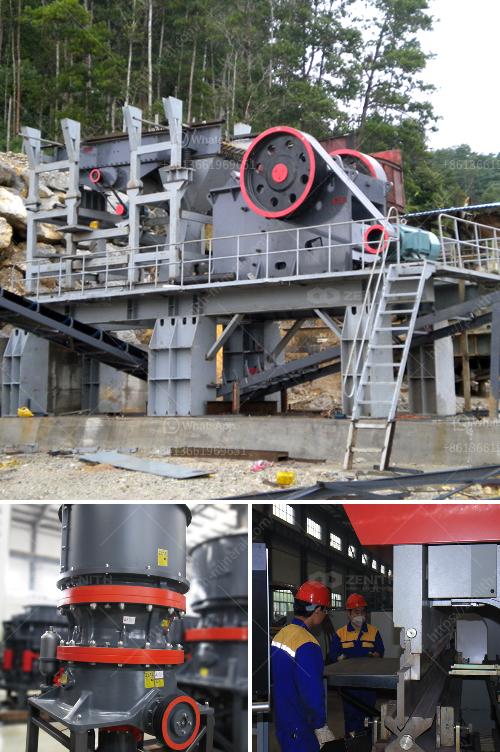
Processing barite mineral involves several steps to extract and purify the mineral for various industrial applications. Barite, also known as baryte, is a mineral composed of barium sulfate (BaSO₄). It is commonly used in the oil and gas industry as a weighting agent in drilling fluids, among other applications. Here is a detailed explanation of the process:
1. Mining and Extraction
Barite is typically extracted from open-pit or underground mining operations. The choice of mining method depends on the depth and location of the barite deposit. The steps involved in mining include:
- Exploration: Geologists conduct surveys to locate barite deposits. This involves geological mapping, sampling, and drilling to determine the size and quality of the deposit.
- Drilling and Blasting: Once a deposit is identified, drilling and blasting are used to break up the rock containing barite.
- Excavation: The broken rock is then excavated using heavy machinery such as excavators and loaders.
2. Crushing and Grinding
After extraction, the barite ore is transported to a processing plant where it undergoes crushing and grinding to reduce the size of the ore particles. This is done in several stages:
- Primary Crushing: The ore is initially crushed using jaw crushers or gyratory crushers to break it into smaller pieces.
- Secondary Crushing: The crushed ore is further reduced in size using cone crushers or impact crushers.
- Grinding: The ore is then ground into a fine powder using ball mills, rod mills, or hammer mills. This increases the surface area of the barite particles, making it easier to separate the barite from other minerals.
3. Separation and Concentration
The ground barite ore is subjected to various separation and concentration processes to remove impurities and increase the concentration of barite. Common methods include:
- Gravity Separation: This method takes advantage of the high specific gravity of barite. The ground ore is passed through jigs, spirals, or shaking tables, which separate the heavier barite particles from lighter impurities.
- Flotation: In some cases, flotation is used to separate barite from other minerals. The ground ore is mixed with water and chemicals to create a slurry. Air bubbles are introduced, causing the barite to attach to the bubbles and float to the surface, where it can be skimmed off.
- Magnetic Separation: If the barite ore contains magnetic impurities, magnetic separation can be used to remove them.
4. Dewatering and Drying
After separation, the barite concentrate is dewatered to remove excess water. This can be done using:
- Thickening: The slurry is passed through thickeners, which allow the solid particles to settle and the water to be removed.
- Filtration: The thickened slurry is then filtered using vacuum or pressure filters to remove additional water.
- Drying: The filtered barite concentrate is dried using rotary dryers or fluidized bed dryers to reduce the moisture content to the desired level.
5. Purification and Refining
In some cases, further purification and refining may be required to produce high-purity barite. This can involve:
- Chemical Treatment: The barite concentrate may be treated with chemicals to remove remaining impurities. For example, acid leaching can be used to remove iron oxides.
- Calcination: The barite may be heated to high temperatures in a kiln to remove any remaining volatile impurities and improve its whiteness.
6. Packaging and Distribution
Once the barite has been processed and purified, it is packaged for distribution. This can involve:
- Bagging: The barite powder is typically packaged in bags of various sizes, depending on the requirements of the end user.
- Bulk Shipping: For large-scale industrial applications, barite may be shipped in bulk using trucks, railcars, or ships.
Applications of Processed Barite
Processed barite is used in a variety of applications, including:
- Oil and Gas Industry: As a weighting agent in drilling fluids to control wellbore pressure and prevent blowouts.
- Chemical Industry: In the production of barium compounds, such as barium carbonate and barium chloride.
- Paint and Coatings: As a filler and extender to improve the properties of paints and coatings.
- Plastics and Rubber: As a filler to enhance the strength and durability of plastic and rubber products.
- Medical Industry: In medical imaging, barite is used as a contrast agent for X-ray and CT scans.
By following these steps, barite can be efficiently processed and purified for use in various industrial applications.