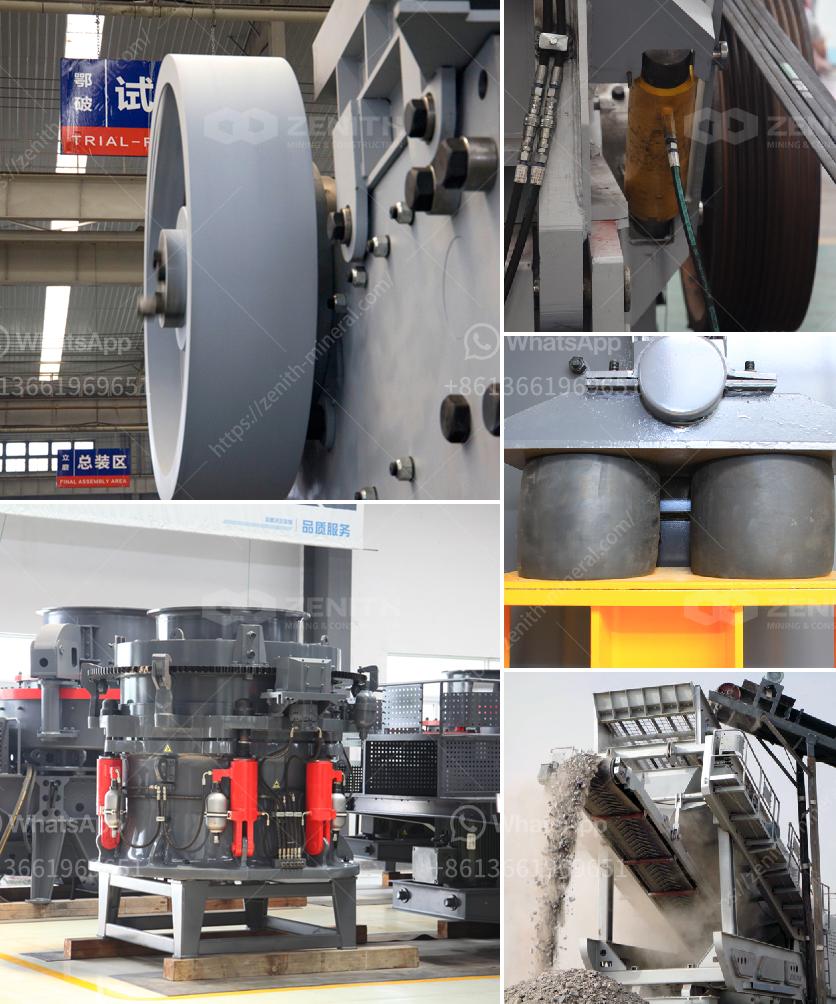


A portable concrete crusher typically operates by utilizing a combination of mechanical processes to break down and pulverize concrete material into smaller, manageable pieces. Here’s a general overview of its operation:
Feeding: Raw concrete material is fed into the crusher’s feed hopper. This is usually done using a loader or an excavator.
Primary Crushing: The material passes through the primary crushing chamber where a jaw crusher or an impact crusher breaks down the larger chunks into smaller pieces. The crushing mechanism can vary depending on the type of crusher; jaw crushers use compressive force, while impact crushers use rapid, high-speed impacts.
Secondary Crushing (if needed): Some systems include a secondary crusher that further reduces the size of the material. This can involve additional jaw crushers, cone crushers, or impact crushers.
Screening: The crushed material is then screened to separate it into different size fractions. Screens can be built into the crusher unit or used as a separate component. Oversized material that does not meet the desired size specifications is recycled back into the crusher.
Conveying and Sorting: Once the material is crushed and screened, it is conveyed to different piles or bins for storage or further use. Magnetic separators may also be used to remove any metal debris from the concrete.
Output and Distribution: The final crushed and screened concrete material can then be used for various applications such as road base, fill material, or as part of new concrete mixes.
Portable concrete crushers are designed to be easily transported from one job site to another, making them convenient for on-site concrete recycling projects. They integrate all these processes within one compact and mobile unit, enhancing efficiency and reducing the need for multiple pieces of machinery.