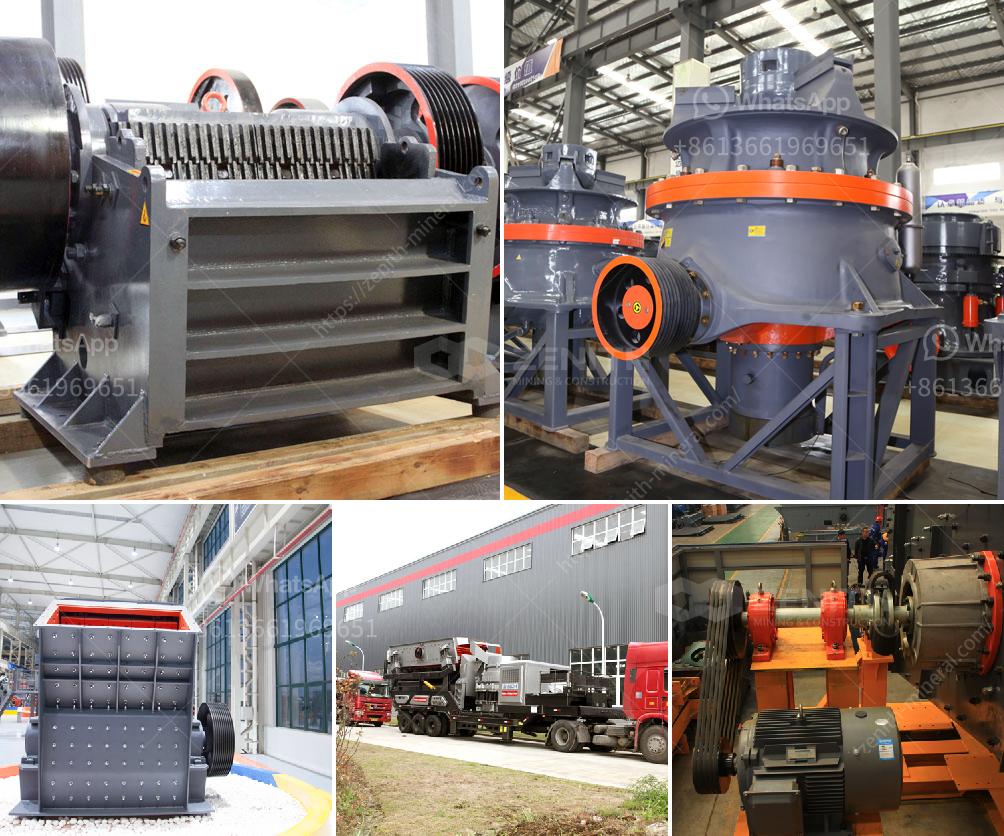
A stone crushing plant involves several key stages and equipment to ensure efficient and effective processing of raw materials. Here’s a concise outline of the typical process line:
-
Raw Material Feeding:
- Hopper: Raw materials such as large stones or rocks are loaded into the hopper for initial storage.
- Vibrating Feeder: The feeder regulates the flow of materials to the crusher.
-
Primary Crushing:
- Jaw Crusher: Large stones are crushed into smaller sizes. The jaw crusher uses compressive force for breaking down materials.
-
Secondary Crushing:
- Impact Crusher or Cone Crusher: Further reduces the size of the material. Impact crushers are typically used for softer stones, while cone crushers handle harder materials.
-
Screening:
- Vibrating Screen: Segregates crushed material into different size grades. It typically consists of multiple layers to produce a variety of aggregate sizes.
-
Tertiary Crushing (Optional):
- Fine Crusher or Sand Making Machine: For finer material production, a tertiary crusher may be required.
-
Conveying:
- Belt Conveyors: Continuous transport of crushed materials between stages and to end storage or further processing areas.
-
Storage and Stockpiling:
- Stockpile Conveyors: Transport and stack processed stone into different stockpiles depending on size and type.
-
Dust Control and Environmental Measures:
- Dust Suppression Systems: Water sprays or dust extractors to minimize airborne particles.
- Enclosures and Barriers: Mitigate noise and dust emissions.
-
Electrical Control System:
- Ensures coordinated operation of the various components, including start/stop sequences, emergency stop functions, and overall plant automation.
Each stage is crucial to producing a consistent and high-quality end product according to required specifications. The exact configuration can vary based on the capacity, the type of material being processed, and the specific requirements of the final product.