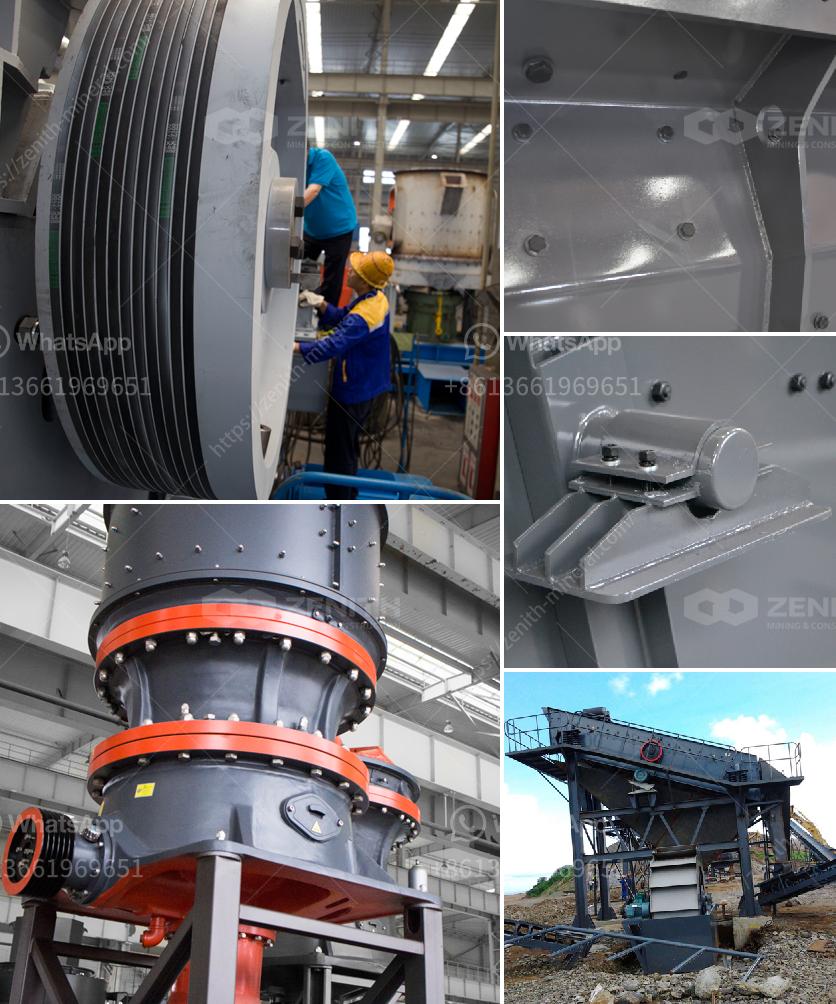
A quarry stone crushing production line is designed to process large rocks into smaller stones and aggregates for various construction and industrial applications. The key components of such a production line typically include:
-
Feeding System:
- Vibrating Feeder: It is used to evenly and continuously feed large materials into the crusher, and it has an anti-rust function that prolongs its lifespan.
-
Crushing System:
- Jaw Crusher: This is a primary crusher used to crush large stones into manageable sizes for further processing.
- Impact Crusher/Cone Crusher: Depending on the specific needs, an impact crusher or a cone crusher is used for secondary crushing to achieve the desired size and specification.
-
Screening System:
- Vibrating Screen: It is used to separate stones according to size. Various layers of screens may be employed to produce different specifications of stones.
-
Conveying System:
- Belt Conveyors: These are used to transport materials between different stages of the crushing process. They can help move the crushed stones from one part of the line to another efficiently.
-
Control System:
- Automated control systems are used for monitoring and controlling the operation of the crusher and conveyor systems to ensure efficient and safe production.
-
Dust Collection and Suppression System:
- This includes dust suppressors and collectors to control dust emissions produced during the crushing and screening processes, maintaining environmental compliance and worker safety.
-
Storage System:
- Stockpile Conveyors and Storage Stackers are used to organize and store the finished crushed stone products.
-
Auxiliary Equipment:
- May include items like magnetic separators, metal detectors, and vibrating hopper feeders to aid in the removal of impurities or metals that might not be suitable for crushing.
The entire setup can be customized based on the specific requirements of the quarry operation, considering factors like the desired output size, production capacity, and the nature of the stone being processed.