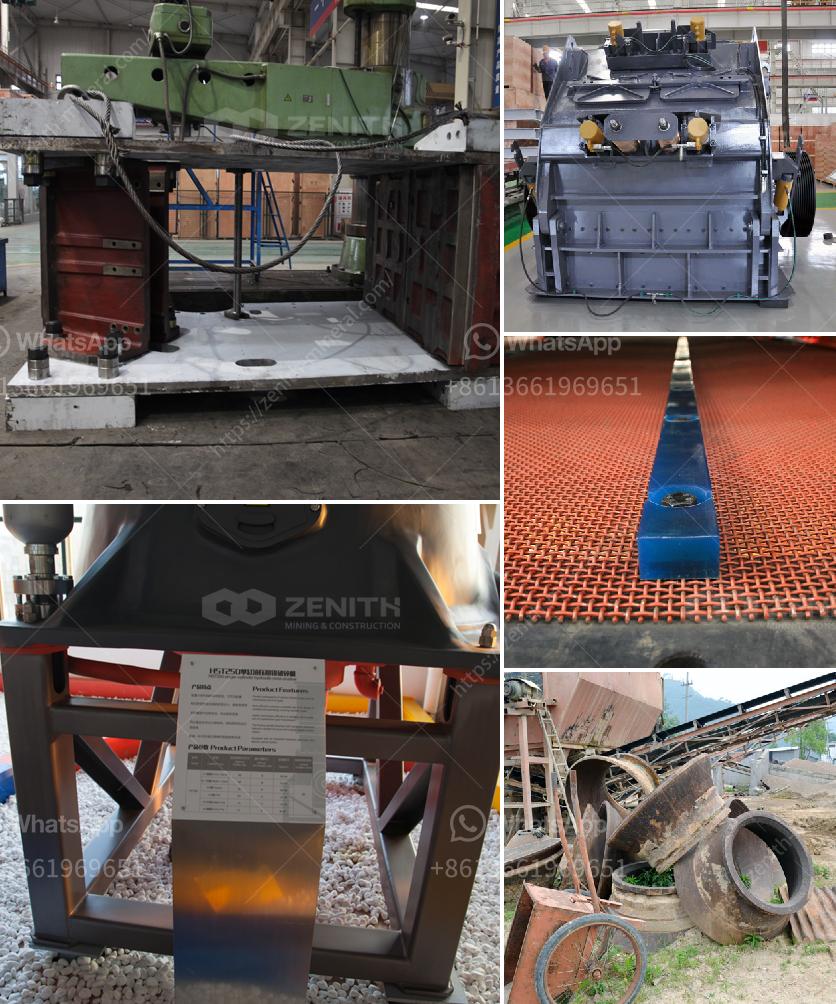
A hammer mill and a jaw crusher are both used in the process of crushing materials, but they operate differently and are suitable for different types of applications. Here are the key differences:
1. Operating Principle:
- Hammer Mill: A hammer mill utilizes high-speed rotating hammers to impact material, breaking it down into smaller pieces. The material is fed into a chamber where it is struck repeatedly by the hammers and then forced through a screen.
- Jaw Crusher: A jaw crusher uses compressive force to crush material. It features two jaws—one fixed and one movable. The movable jaw compresses material against the fixed jaw, crushing it. The material progressively smaller until it is small enough to escape through the gap at the bottom.
2. Type of Material:
- Hammer Mill: Best suited for softer materials with less abrasiveness like coal, limestone, and soft ores. It can also be used for size reduction of waste and recycling materials.
- Jaw Crusher: Effective for harder and more abrasive stones and ores, including granite, quartz, and iron ore. Ideal for primary crushing.
3. Output Size:
- Hammer Mill: Typically produces a finer output and can be adjusted by changing the screen size.
- Jaw Crusher: Produces coarser output with variability in the size of the output product dependent on the jaw settings.
4. Mechanical Structure:
- Hammer Mill: Generally simpler in construction, with fewer moving parts. The hammers are mounted on a rotor that spins at high speed.
- Jaw Crusher: More complex, comprising two main plates (the fixed jaw and the movable jaw) and additional components like toggles and springs.
5. Energy Consumption:
- Hammer Mill: Generally requires a higher amount of energy due to the high-speed action of the hammers.
- Jaw Crusher: Generally more energy-efficient in comparison, as it requires less power to break harder materials.
6. Maintenance:
- Hammer Mill: Requires more frequent maintenance due to the wear and tear on the hammers and screens.
- Jaw Crusher: Maintenance is typically less frequent but may involve more complex work, such as adjusting jaw plates or repairing wear parts.
7. Applications:
- Hammer Mill: Often used in agricultural and industrial applications for crushing relatively soft materials.
- Jaw Crusher: Commonly employed in mining and heavy industrial applications for primary crushing of hard materials.
In summary, the choice between a hammer mill and a jaw crusher depends on the material characteristics, desired output size, energy considerations, and the specific processing requirements.