Aggregates are produced from a crusher plant through a series of processes that involve the extraction, crushing, and screening of raw materials. Here is a detailed explanation of each step involved in the production of aggregates:
-
Extraction:
- Quarrying: The process begins with the extraction of raw materials from a quarry. This involves the removal of large rocks and boulders from the earth using heavy machinery such as excavators, bulldozers, and drilling rigs.
- Blasting: In some cases, blasting is used to break up large rock formations. Explosives are strategically placed in drilled holes and detonated to fracture the rock into smaller, more manageable pieces.
-
Transportation:
- Once the raw materials are extracted, they are transported to the crusher plant. This is typically done using large dump trucks or conveyor belts, depending on the distance and terrain.
-
Primary Crushing:
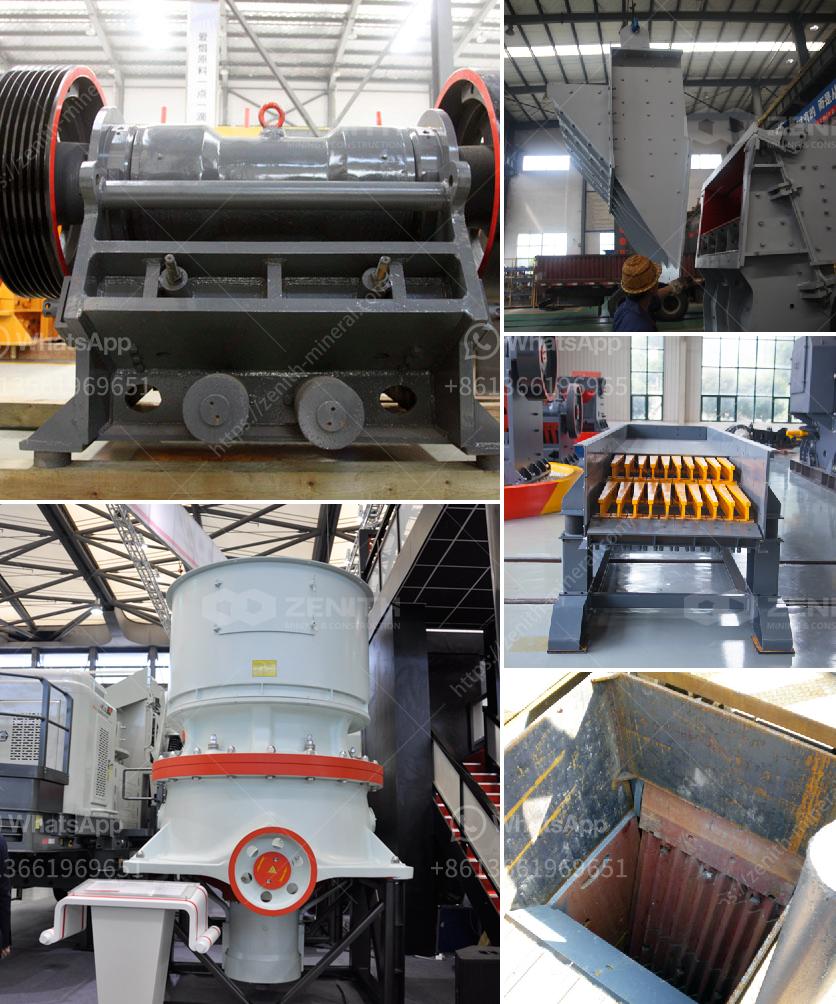
- Jaw Crusher: The first stage of crushing involves the use of a jaw crusher. This machine uses compressive force to break down large rocks into smaller pieces. The jaw crusher consists of two plates, one stationary and one moving, which work together to crush the material.
- Gyratory Crusher: In some plants, a gyratory crusher may be used instead of a jaw crusher. This type of crusher uses a gyrating cone to crush the material against a fixed outer wall.
-
Secondary Crushing:
- Cone Crusher: After primary crushing, the material is further reduced in size using a cone crusher. This machine operates on the principle of an oscillating shaft, which crushes the material against a stationary outer wall.
- Impact Crusher: Alternatively, an impact crusher may be used. This type of crusher uses high-speed impact to break down the material. The material is fed into a chamber where it is struck by rotating hammers or blow bars.
-
Screening:
- Vibrating Screen: The crushed material is then passed through a series of vibrating screens. These screens have different sized openings that allow smaller particles to pass through while larger particles are retained for further crushing.
- Grading: The material is sorted into different sizes based on the requirements of the final product. This process is known as grading and ensures that the aggregates meet specific size specifications.
-
Tertiary Crushing:
- In some cases, a tertiary crusher is used to further reduce the size of the material. This stage is typically used for producing finer aggregates or for specific applications that require a particular size and shape.
-
Washing:
- Washing Plant: To remove any impurities such as clay, silt, or dust, the aggregates may be washed. This is done using a washing plant that sprays water over the material as it passes through a series of screens and classifiers.
-
Stockpiling:
- Once the aggregates are crushed, screened, and washed, they are stockpiled in different sizes. This is done using conveyor belts or stackers that create large piles of material ready for use in construction projects.
-
Quality Control:
- Throughout the production process, quality control measures are implemented to ensure that the aggregates meet the required standards. This includes regular testing of the material for size, shape, and strength.
-
Distribution:
- Finally, the aggregates are loaded onto trucks or conveyor belts for distribution to construction sites, concrete plants, or other end-users.
In summary, the production of aggregates from a crusher plant involves a series of steps including extraction, transportation, primary and secondary crushing, screening, washing, stockpiling, quality control, and distribution. Each step is crucial in ensuring that the final product meets the required specifications for use in various construction applications.