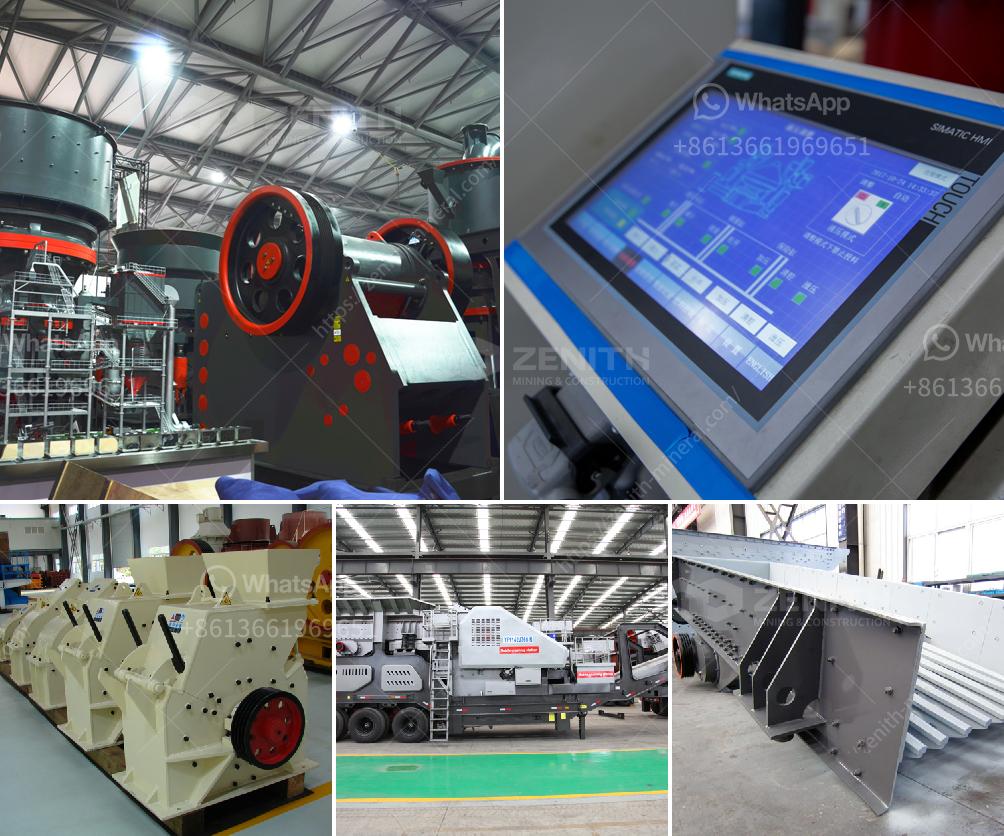
An aggregate crusher is a machine designed to grind or pulverize various types of rock into small, relatively uniform pieces. Aggregate crushers are used in mining, quarrying, and recycling operations. There are several types of crushers, each with its own unique working mechanism and application. Here’s a detailed explanation of how an aggregate crusher works:
Types of Aggregate Crushers
-
Jaw Crusher:
- Working Principle: A jaw crusher uses compressive force to break down large materials into smaller, more manageable pieces. The machine consists of two jaws, one fixed and one movable. The movable jaw moves back and forth against the fixed jaw, crushing the material between the two.
- Application: Jaw crushers are primarily used for primary crushing, where large rocks are reduced in size before being processed further.
-
Cone Crusher:
- Working Principle: A cone crusher operates similarly to a gyratory crusher, but it has a less steep crushing chamber and more parallel zone between the crushing zones. The material is crushed by compressive forces between a stationary piece of steel and a moving piece of steel.
- Application: Cone crushers are used for secondary or tertiary crushing, where the material is reduced to a finer size.
-
Impact Crusher:
- Working Principle: An impact crusher uses impact force to crush materials. The material is fed into a chamber containing a high-speed rotor with hammers or blow bars. As the rotor spins, the material is struck by the hammers and thrown against impact plates, breaking it into smaller pieces.
- Application: Impact crushers are used for primary, secondary, or tertiary crushing, depending on the size and type of material.
-
Gyratory Crusher:
- Working Principle: A gyratory crusher consists of a concave surface and a conical head. The material is crushed in a crushing cavity, between an external fixed element (concave) and an internal moving element (mantle) mounted on the oscillating shaft assembly.
- Application: Gyratory crushers are used for primary crushing of various hard ores or rocks.
-
Roll Crusher:
- Working Principle: A roll crusher uses two rotating cylinders that rotate in opposite directions. The material is fed between the two rolls, where it is crushed by compression and shear forces.
- Application: Roll crushers are used for secondary or tertiary crushing of softer materials.
Crushing Process
-
Feeding: The material to be crushed is fed into the crusher through a hopper or feeder. The size and type of feeder depend on the crusher type and the material being processed.
-
Crushing: The material is subjected to compressive, impact, or shear forces, depending on the type of crusher. The crushing process reduces the size of the material to the desired level.
-
Discharge: The crushed material is discharged from the crusher and can be further processed or used as is. The discharge size can be adjusted by changing the settings of the crusher.
Factors Affecting Crusher Performance
- Material Hardness: Harder materials require more force to crush and may wear down the crusher components faster.
- Feed Size: Larger feed sizes require more energy to crush and may reduce the efficiency of the crusher.
- Crusher Settings: The settings of the crusher, such as the closed side setting (CSS) and the open side setting (OSS), affect the size of the output material.
- Moisture Content: High moisture content can cause clogging and reduce the efficiency of the crusher.
- Wear and Tear: Regular maintenance and replacement of worn parts are essential to ensure the crusher operates efficiently.
Conclusion
Aggregate crushers play a crucial role in the production of aggregate materials used in construction, road building, and other industries. Understanding the working principles and applications of different types of crushers can help in selecting the right crusher for a specific application, ensuring efficient and effective crushing operations.