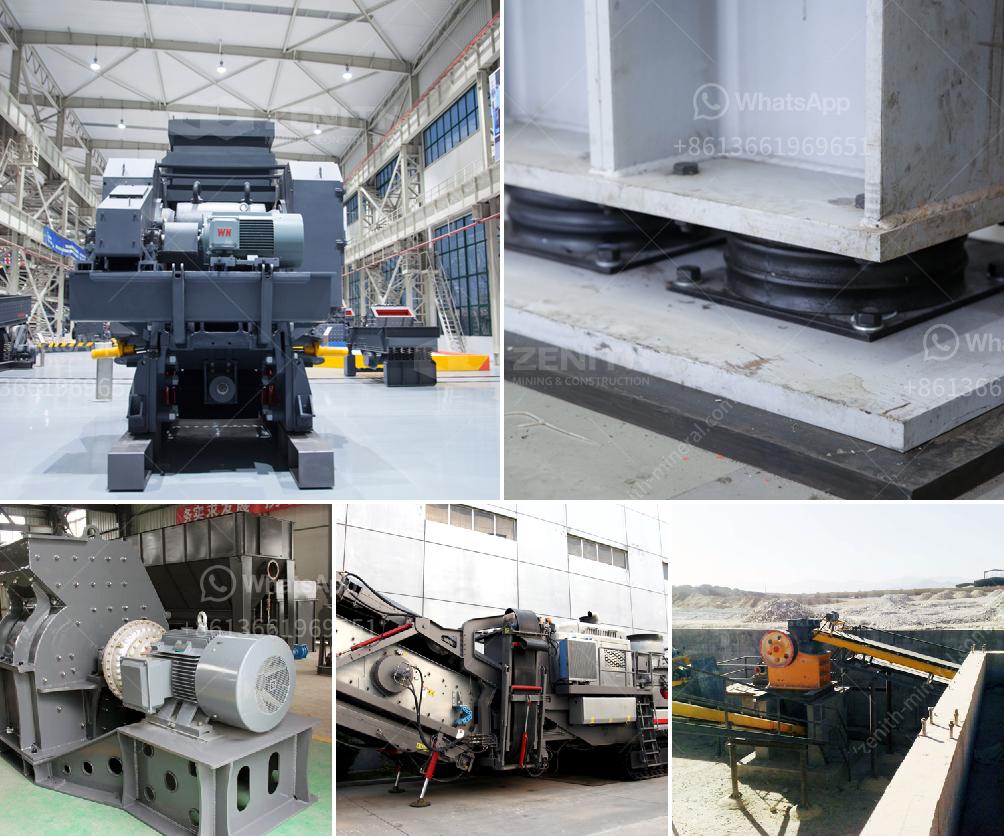


A stone crusher in a quarry works through several stages to transform raw stones into smaller, usable pieces for various purposes, including sand. Here’s an overview of the process:
Initial Crushing: Large rocks and stones are fed into the stone crusher, often through a vibrating feeder, which helps regulate the flow of materials. Once inside, the rocks are crushed by jaw crushers, which use compressive force to break down the larger rocks into smaller, more manageable sizes.
Secondary Crushing: The smaller rocks from the initial stage are then sent to secondary crushers such as cone crushers or impact crushers. These crushers provide further reduction and refinement of the stone particles.
Screening: After crushing, the material is transported to screens that sort the crushed stones by size. Materials that meet the required specifications are separated, while larger pieces may be returned to the crusher for further processing.
Tertiary Crushing: In some cases, depending on the desired final product, tertiary crushing might be used to achieve finer granularity. This can involve using vertical shaft impactors (VSI) which are particularly efficient for producing fine, uniform grains of sand.
Sand Making and Shaping: The refined smaller rocks are then processed in sand-making machines (like VSI crushers) where they are further reduced to produce high-quality sand. These machines use high-speed rotor forces to crush the rocks and smoothen out irregular particles, ensuring a consistent texture and quality.
Washing: Sometimes, the sand produced may be washed to remove impurities and ensure purity. Washing helps produce cleaner and more uniform sand, which is highly desirable for use in construction and making concrete.
Dust Collection: During the entire process, dust produced by crushing operations is often collected using dust suppression systems to minimize environmental impact and ensure safety compliance.
Overall, the stone crushing process in a quarry involves multiple stages and various types of equipment to efficiently produce the desired product, whether it’s gravel, aggregate, or high-quality sand.